
Insights (3): The EU timeline for information in the Battery Passport

Insights post – Part 3 of 3.

The information in this post is now superceded.

NOTE – this blog post relates to a 2023 reserach project which was analysing the evolving EU Batteries Regulation.

In Part 2 of our Insights post, we introduced the specific information points that the EU expects to be accessible within the Battery Passport.

In this video, we explain the timeline, by which these information points should be accessible via the Smart Label, Battery Passport, and Electronic Exchange System Portals.

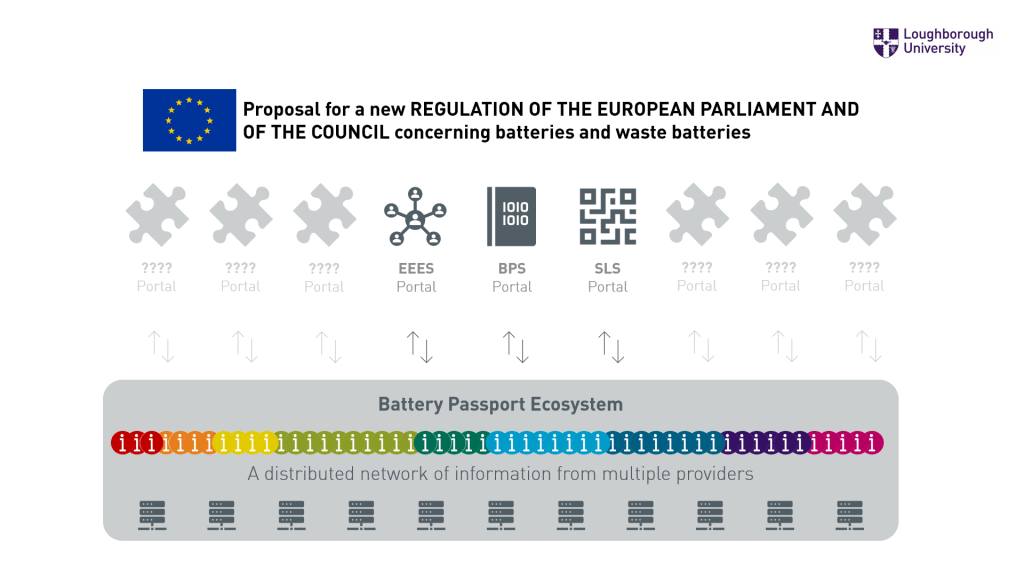
In short: The QR label requirements come first, and are applicable to all types of battery. For industrial and EV batteries, further performance information must be provided via the passport. The Electronic Exchange then requires duplicate access to much of this information. This video ends in an observation; that while the EU explicitly defines three information exchange systems, there are many other forms of information exchange required by the regulation that could also form part of the Battery Passport Ecosystem.
This will be the subject of our next insights article.
Insights (1): Battery Passports and the EU’s new Battery Regulations

Insights Post – Part 1 of 3.

The information in this post is now superceded.

NOTE – this blog post relates to a 2023 reserach project which was analysing the evolving EU Batteries Regulation.

The EU’s new Battery Regulations are nearly here, and will introduce the first mandatory adoption of product passport technologies.

In this first video, we introduce the EU’s battery regulation and explain it in the context of a ‘Battery Passport Ecosystem’ that we have generated as part of our research.

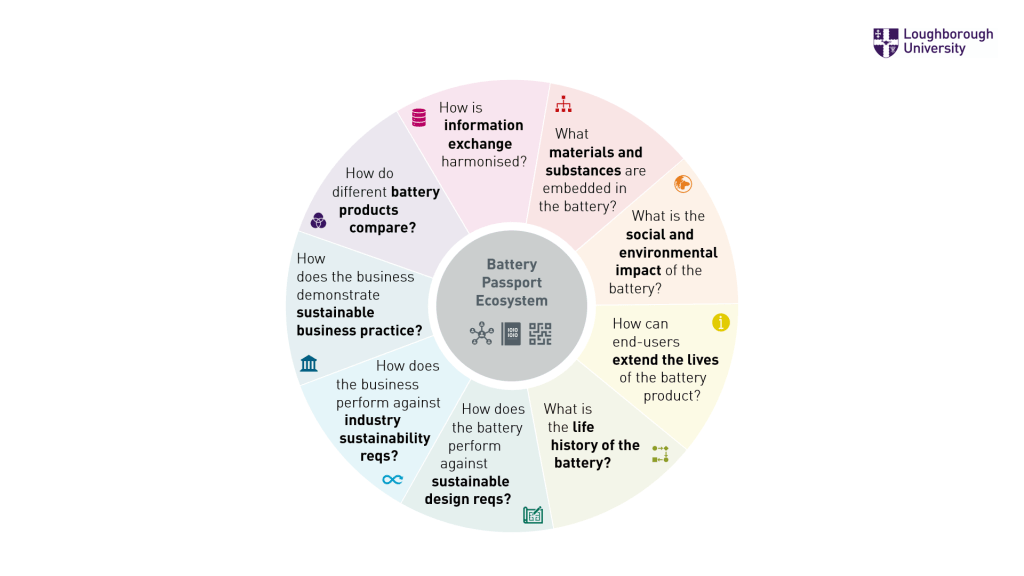
In short: Battery passports are an information sharing tool designed to improve know-how within the battery value chain, and its overall capability.  But their benefits are largely dependent on the information that ends up inside each passport. In the EU’s new battery regulation, three new information innovations are introduced; an Electronic Exchange System, a Battery Passport, and a QR Smart Label. These are being introduced to encourage (and enforce) information transfer between stakeholders. The EU positions these as separate ‘systems’ within the regulation, but information requirements overlap, so really these should be seen as part of a wider battery passport ecosystem, seeking to address nine common questions.

In Part 2, we will explain these nine functional viewpoints of a battery passport ecosystem in more detail, and will identify the explicit and implicit information requirements introduced by the new battery regulations. In Part 3 we will show the timeline by which these information points should be accessible.